
Before I share the full Risknado story, I want to start with the part most founders leave out: the frustrating bits. The surprises. The things that quietly cost time and/or money. The parts you only learn by doing - and the nice thing is that there is always a way through - so just keep going! I've included links to help you move faster.
I built Risknado solo. No team, no funding, no agency. Just me, Supabase, Lovable, and a stack of modern tools. And even with all the no code and AI advantages we have today, there were still challenges that I did not expect.
What I Learned Building Risknado
Here are the biggest takeaways I wish someone had told me earlier:
- No code accelerates development but does not eliminate architectural thinking.
- SEO for SPAs must be solved early or you will pay for it later.
- Outbound is only effective with good domain hygiene.
- Compliance matters even at pre-revenue stage.
- Costs are invisible until you list them.
- A simple product is still complex behind the scenes.
- Supabase RLS is powerful but unforgiving; correctness matters.
- Shipping fast is good, but shipping secure is essential.
What Surprised Me Most While Building Risknado
1. How hard SEO is for SPA site builders
Lovable is fantastic for fast product development, but as a single page application the SEO constraints hit immediately. Google does not reliably index SPAs without additional work, so I had to introduce prerendering with LovableHTML and then separate the blog entirely using Blogmaker.
Lesson learned: SPA builders are incredible for shipping, but you must design a workaround if you want organic traffic.
2. CAN-SPAM compliance costs money
I did not want my home address on outbound emails, especially to the USA, where I think I'll target first. That meant getting a real London mailing address, and it surprised me that this tiny detail cost £47.98. Most founders in early stages skip this, but I wanted to stay compliant from day one.
Lesson learned: compliance is not optional and even small legal requirements have real costs.
3. Outbound deliverability is a whole project by itself
Setting up a clean domain, workspace email, suppression rules, Apollo, and ensuring no link tracking in early emails was far more work than expected. Outbound isn’t “turn it on and send emails”. It is reputation management.
Lesson learned: treat outbound like a product. Good deliverability is earned, not granted.
4. Storing public assets securely is not plug and play
I wanted to share a sample pack PDF publicly, which meant learning how to lock down Supabase Storage correctly. Public read access is easy, but ensuring that no one else can upload or modify files required RLS policies that I had to get exactly right.
Lesson learned: even simple things like “make this downloadable” require secure backend thinking.
5. Costs add up in ways you don’t anticipate
None of the tools felt expensive on their own. But everything together creates a real monthly burn. Even a lightweight solo SaaS has a financial footprint.
The current total is below, and I will say it openly because most people hide it.
Actual Costs to Build and Run Risknado
Here is the real breakdown so far:
- Lovable for hosting: $50 per month (Business Plan) + $25 one-off top up
- Supabase: $0 for now (will be $25 when the project grows)
- Intruder for penetration testing: £113 once-off (so far)
- LovableHTML for server-side cached prerenders: $9 per month
- Blogmaker for blog.risknado.com: $19 per month (already on their Expert plan)
- London business address for CAN-SPAM: £47.98
- Dedicated support email address: $6 per year
- Google Workspace email for outbound: £6 per month
- Apollo outbound tool: $50 per month for 2500 credits
Total monthly burn at this stage:
Around $134 plus £6 monthly, and a one-off £47.98 for compliance.
Lesson learned: even a lean SaaS has recurring gravity. Budgeting matters.
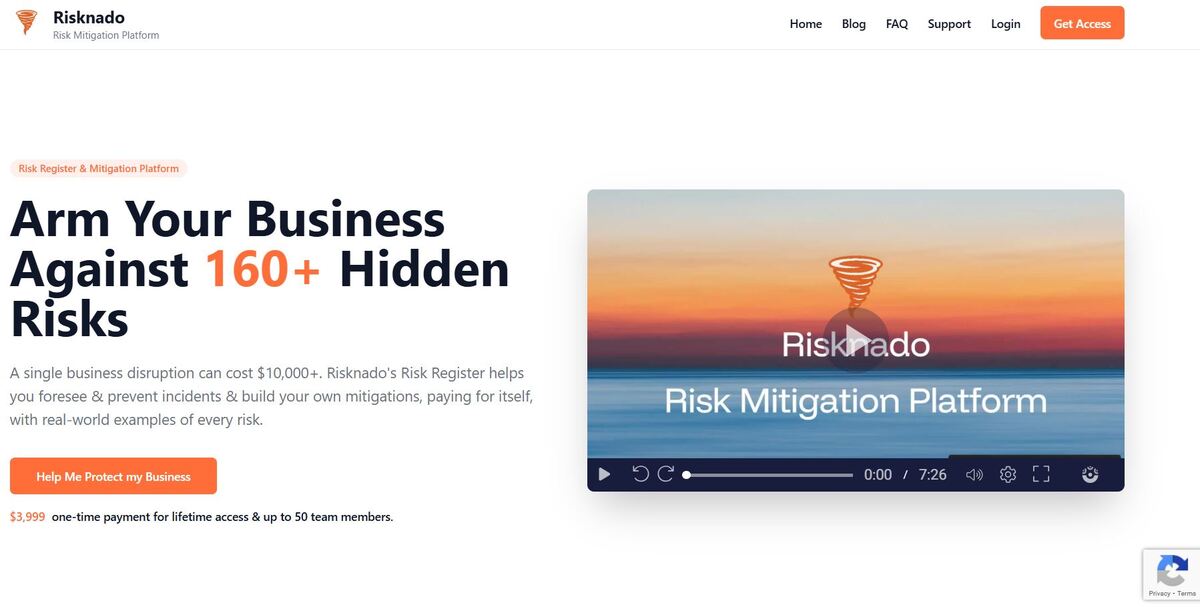
Arm Your Business Against 160+ Hidden Risks
$3,999: One-time payment for lifetime access & up to 50 team members
Get AccessNow, the Full Story: How I Built Risknado From Scratch
Risknado began with a clear realisation: most companies face dozens of operational, financial, compliance, and people risks, but very few have a structured way to track them. Most teams either use outdated spreadsheets or worse, nothing at all.
I had seen firsthand how hidden risks can grow quietly until they become expensive or painful. So I set out to create something simple, structured, and actually usable by real teams.
Designing the Core Product
I wanted Risknado to be fast to adopt and valuable from the first login. That meant building three things:
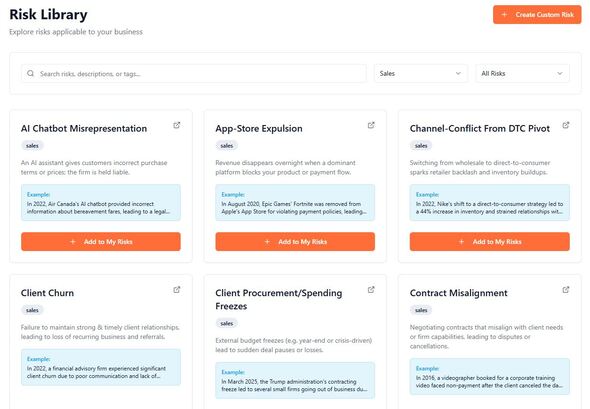
- A curated library of more than 160 real business risks, each with examples. I came up with a the core structure, the business areas, and many of the risks within these. I also worked with Gemini, ChatGPT and Grok to develop and test the list, getting the various models to check each other
- Automatic scoring and prioritisation that updates as teams adjust likelihood and impact.
- Clear ownership and progress tracking so leaders always know the state of their risks.
No theory. No fluff. Just a straight line from problem to visibility.
Building the Platform
I built the front end on Lovable for speed and quality. I built the backend on Supabase for authentication, RLS, storage and relational data that I could control fully.
This tech stack let me ship quickly without giving up structure or reliability.
Solving SEO the practical way
Since Lovable is an SPA, I needed prerendering for Google. LovableHTML solved that and allowed me to keep hosting simple. For the blog, I used Blogmaker and placed it at blog.risknado.com to keep SEO-friendly pages separate from the app.
Creating pricing that reflects real value
Risknado now sits at $3,999 for a lifetime license, rather than a monthly subscription.
The logic is simple: if a single avoided incident saves a company thousands, the platform pays for itself on day one.
Setting up outbound and compliance
I built a targeted outbound engine through Apollo, focused on COOs, CEOs, Ops Directors and Founders. This required:
- A dedicated outbound domain and workspace
- A professional support address
- A London business address for CAN-SPAM
- Clean, deliverability-friendly cold email copy
- No link tracking in the first email
- A sample pack of 15 real risks as a lead magnet
Outbound is now part of the growth engine rather than an afterthought.
Where Risknado Goes Next
Risknado is at the stage where early users can directly influence what comes next. The platform already makes risk management simple and actionable, but the roadmap includes:
- Multi-user workspaces
- Department specific templates
- Exportable risk reports
- More curated industry risk packs
- And lightweight integrations
The goal is the same: help leaders prevent problems before they happen.
Arm Your Business Against 160+ Hidden Risks
$3,999: One-time payment for lifetime access & up to 50 team members
Get Access