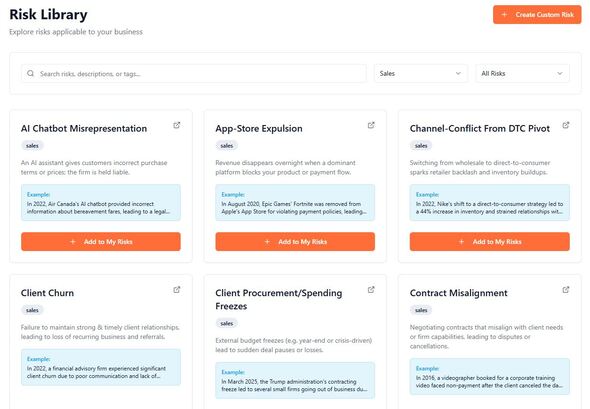


Below are five high impact Compliance risks featured within Risknado’s 160+ risk library. Each includes a real-world example that shows how quickly a compliance lapse can escalate into a serious operational threat.
These are not to dampen or dissuade growth - these are risks to be aware of and mitigate so growth is unencumbered.
1. Abrupt New Taxes or Regulatory Changes
Risk:
Unexpected shifts in tax or regulatory requirements sharply raise operating costs, squeeze margins, and force price increases or business closures.
Why it matters:
External regulatory decisions can change overnight, and industries with thin margins feel the impact fastest. Most companies underestimate the lag between a tax announcement and the operational steps needed to absorb, pass on, or mitigate the cost.
Real-world example:
In August 2023, the UK government introduced the largest alcohol duty increase in 50 years. Draught beer duty rose by about 10 percent and spirits duty by nearly 11 percent. Pub operators and small breweries warned the increase would devastate margins, accelerate insolvencies, and force businesses already struggling with energy and wage inflation to shut their doors.
What this means for your business:
If tax changes can wipe out a sector’s profitability in a single month, your organisation needs awareness of these changes, and a structured way of tracking compliance and potential gaps
2. Unauthorized Use of Client Intellectual Property
Risk:
Using client IP in marketing materials without consent, including images, trademarks, copy, or likenesses, leading to disputes or legal action.
Why it matters:
Marketing teams move fast. In many companies, compliance sign-off is inconsistent or absent entirely. A single asset posted on social media can expose your organisation to lawsuits or brand damage within minutes, especially if it appears to misuse a partner’s IP.
Real-world example:
In 2011, Kim Kardashian sued The Gap Inc. for using a lookalike model in an Old Navy campaign. She alleged the advert misappropriated her likeness, and the dispute ended in a confidential settlement.
What this means for your business:
Your business needs to develop a risk-conscious culture and a way of tracking these risks within each project; with marketing teams being aware of who owns any intellectual property.
Arm Your Business Against 160+ Hidden Risks
$3,999: One-time payment for lifetime access & up to 50 team members
Get Access3. Workplace Safety Violations
Risk:
Failure to maintain safe working conditions results in employee injuries, operational disruptions, compensation claims, and regulatory penalties.
Why it matters:
Health and safety is not just a legal obligation. It is a core operational risk. Many organisations overlook basic hazards that accumulate over time, especially in manufacturing, logistics, warehouse operations, and field services.
Real-world example:
In 2024, Tigerton Lumber Company in Wisconsin was fined nearly $300,000 by OSHA after investigators found several dangerous conditions, including unguarded machines and unprotected stairs. The enforcement followed a fatal 2018 incident where an employee was killed by logging equipment.
What this means for your business:
Inadequate safety practices do not just lead to fines. They damage morale, increase turnover, and can halt operations entirely. Risk audits and regular inspections should be a non-negotiable.
4. Non-Compliance with Advertising Regulations
Risk:
Failing to meet advertising laws or industry standards leads to fines, class action lawsuits, and reputational damage.
Why it matters:
Modern advertising spans dozens of channels at high speed. Claims that seem harmless internally may be unlawful or misleading externally. Regulators and consumer groups now monitor digital content more aggressively than ever.
Real-world example:
In August 2025, Grubhub agreed to pay $7.1 million to settle a class action lawsuit alleging the company falsely advertised partnerships with about 387,000 restaurants that had no relationship with its platform. The case damaged consumer trust and forced a costly legal resolution.
What this means for your business:
Compliance should be embedded in marketing processes, not applied retroactively. Claims must be verifiable, approved, and consistently monitored across all channels.
5. Insurance Gaps
Risk:
Missing, outdated, or insufficient insurance coverage exposes businesses to major financial losses and liabilities that should be mitigated through proper policies.
Why it matters:
Insurance is one of the most misunderstood parts of compliance. Many businesses believe they are covered until a claim event proves otherwise. Policy exclusions, outdated valuations, changes in operations, or gaps between public liability and professional indemnity all create hidden vulnerabilities.
Real-world example:
After the Grenfell Tower fire in 2017, which killed 72 people, investigations revealed significant gaps in liability and property insurance coverage across the organisations involved. These gaps complicated compensation efforts and added financial and reputational risk for multiple stakeholders.
What this means for your business:
Insurance reviews should be scheduled annually and aligned with changes in operations, staffing, and risk exposure. Small gaps can become catastrophic after an incident.
Strengthen Your Compliance Posture Before the Next Shock Hits
Compliance risks rarely appear urgent until they become expensive. The organisations that survive regulatory shifts, legal disputes, safety incidents, or insurance failures are the ones that systematically identify these risks, assess their impact, and assign clear mitigation owners.
Risknado helps you do exactly that.
With a curated library of 160+ real-world business risks, executive-level dashboards, automated scoring, and team workflows, it gives leadership teams a unified place to see risk exposure and act before problems escalate.
Arm Your Business Against 160+ Hidden Risks
$3,999: One-time payment for lifetime access & up to 50 team members
Get AccessSee our other blog articles: